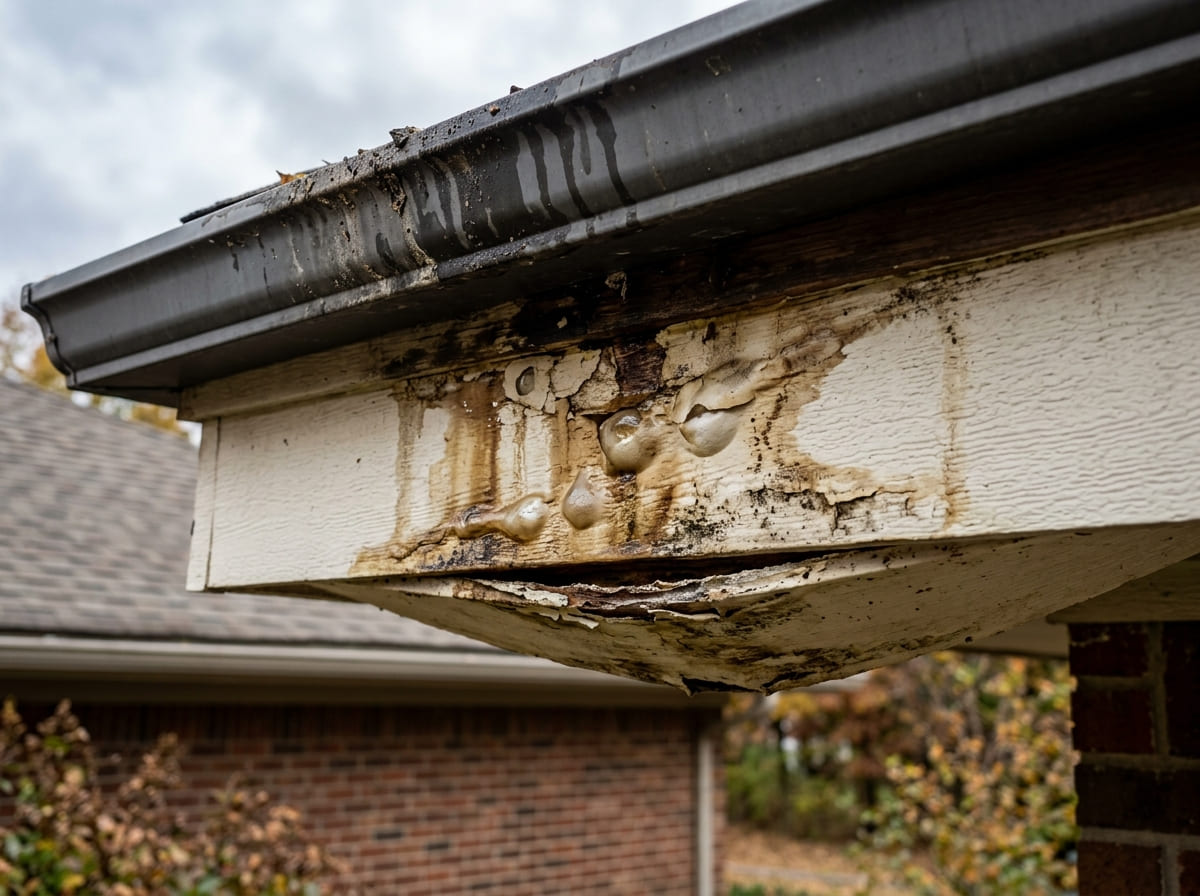
Soffit water damage is one of those problems that looks minor and isn't. By the time a stain or a sag is visible on the underside of your eave, water has already been in contact with the wood long enough to leave a mark — and the same water is reaching the fascia, rafter tails, and roof deck hidden behind the soffit. The visible damage is a fraction of what's happening. That's why treating a water-stained soffit as "just cosmetic" is the single most expensive mistake homeowners make with their eaves. Soffit Fascia Repair's professionals read water damage as a diagnostic clue — where it appears tells us where the water is coming from and how far it has spread.
What Soffit Water Damage Actually Looks Like
Soffit water damage announces itself in several ways, and recognizing them early is the whole game. The signs to watch for are:
- Dark stains or discoloration on the underside of the eave, often brown or yellowish water marks
- Sagging or spongy panels that flex or feel soft when pressed
- Bubbling or peeling paint on wood soffit, a sign moisture is trapped under the film
- Mold, mildew, or a musty smell around the eaves or in the attic near the eave line
- Vinyl or aluminum panels bowing or pulling from their channel, signaling rotted wood behind an intact-looking panel
One warning specific to vinyl and aluminum soffit: the panel can look perfectly fine while the wood structure behind it is soaked and rotting. Non-porous panels hide water damage, so the absence of a visible stain doesn't rule it out — a bowing panel or a loosening gutter is often the only outward sign.
Reading the Damage: Where It Appears Tells You the Source
The location of soffit water damage is the most useful clue to what's causing it, and the cause determines the fix. The main patterns are:
| Where the Damage Shows | Likely Water Source |
|---|---|
| Outer soffit edge, at the fascia junction | Gutter overflow from clogged gutters |
| Localized patch away from the gutters | Roof leak tracking down to the eave |
| Underside, no exterior water source | Attic condensation / poor ventilation |
| Along the fascia face above the gutter | Missing or failed drip edge |
These sources are covered in depth in our guide on what causes soffit rot — the point here is that soffit water damage is never random. It's water following a specific path, and a lasting repair means closing that path, not just replacing the stained panel.
What Happens If You Wait
Water damage compounds, and the progression is predictable. It begins as surface staining while the wood is still sound. As the moisture source keeps operating, the wood passes the threshold where rot fungi establish, and the panel softens and sags. From there the damage spreads laterally along the soffit and backward into the fascia, rafter tails, and sub-fascia — the structural members that hold your gutters and close your roof. Softened wood loses its grip on gutter fasteners, so gutters begin to sag and pull away, which opens a still-larger path for water. Meanwhile the softened soffit becomes an open invitation for squirrels, birds, and other pests looking for a way into the attic.
The cost curve is steep. A stained panel caught early is a modest soffit repair. The same panel left for a year or two can pull the fascia, rafter tails, and gutter mounting into the job, turning a few-hundred-dollar fix into a multi-thousand-dollar structural repair. Water damage is the rare home problem where waiting reliably multiplies the price.
What to Do When You Spot It
The right response to soffit water damage is a prompt inspection, because the two things that matter most — the source of the water and the true extent of the damage — can't be judged from the ground. A contractor's ladder inspection determines whether the damage is still surface-level or has reached the structure, identifies which of the water sources above is at work, and checks the fascia and rafter tails behind the soffit. From there the repair addresses both the damage and its cause together: correcting the gutter, roof, ventilation, or drip-edge issue, then repairing or replacing the affected soffit and any damaged fascia.
Because the inspection is free and the cost of waiting is so high, there's little reason to sit on a water-stained eave. Call (855) 606-2187 to have the source identified while the repair is still small, and see our soffit repair cost guide for what the fix typically runs.
Frequently Asked Questions
What does water-damaged soffit look like?
Look for dark staining or discoloration on the underside of the eave, panels that sag or feel spongy, bubbling or peeling paint, and sometimes visible mold or a musty smell. On vinyl or aluminum soffit, the panel may look fine while the wood behind it is damaged — there, watch for panels bowing or slipping from their channel. Brown water stains on the exterior eave or on the ceiling just inside the wall are common early indicators.
Is soffit water damage serious?
Yes. It's rarely just cosmetic — it signals water is reaching the eave structure, and the same moisture attacks the fascia, rafter tails, and roof deck behind the soffit. Left alone, it progresses from a stained panel to structural rot, pest entry, and eventually water intrusion into the attic and interior walls. Catching it while it's still a surface stain is the difference between a few hundred dollars and a few thousand.
Where does the water causing soffit damage come from?
The most common sources are clogged gutters overflowing down the eave, roof leaks tracking down to the soffit, missing or failed drip edge, and condensation from a poorly ventilated attic. Each leaves a different pattern: gutter overflow damages the outer soffit edge and fascia junction, roof leaks appear as localized patches away from the gutters, and condensation shows on the underside with no exterior water source. Identifying the source is the first step in any lasting repair.
Can water-damaged soffit be repaired, or does it need replacing?
It depends how far it's progressed. Early water damage caught before structural rot sets in can sometimes be dried, treated, and repaired at the panel level. Once the wood has softened, sagged, or rotted through, the affected soffit needs replacement, and the fascia and rafter tails behind it must be inspected for the same damage. In every case the water source has to be corrected, or the repair fails on the same timeline.
How quickly should I act on soffit water damage?
Promptly. Water damage compounds — every additional wet cycle spreads the rot further into the eave and increases the repair scope. A stained panel addressed this month is a minor repair; the same panel left for a year can pull in the fascia, rafter tails, and gutter mounting, multiplying the cost. A free inspection to identify the source and scope costs nothing and lets you fix the problem while it's still small.