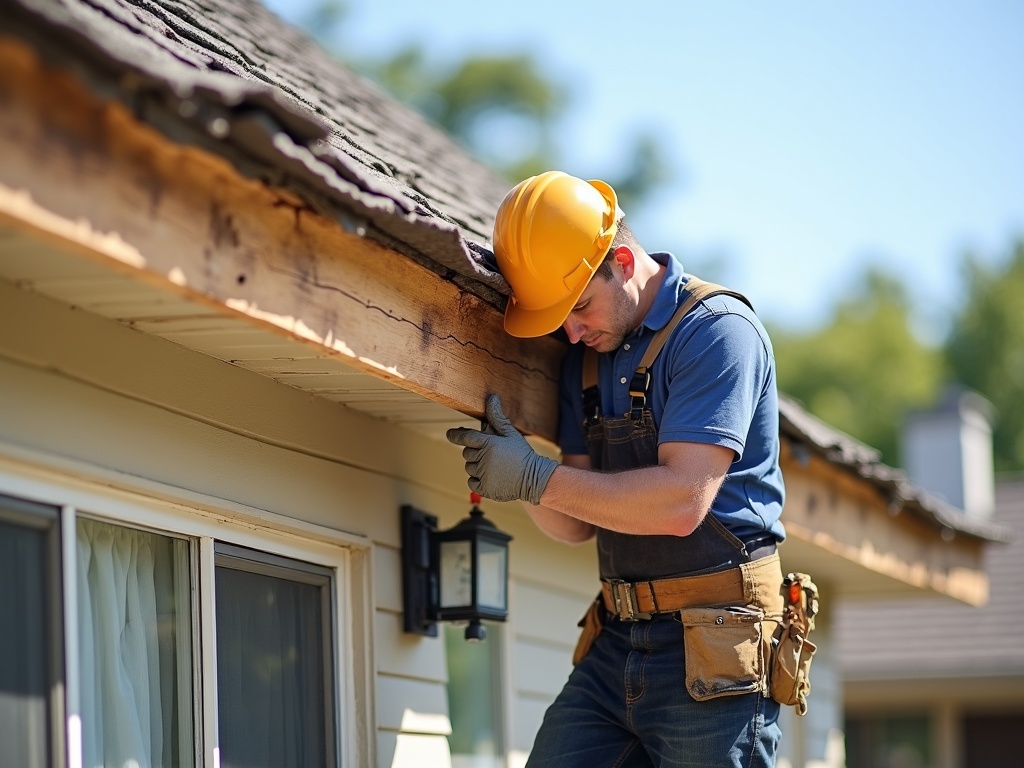
 What Is Fascia?
 The Role of Fascia in Your Home's Exterior
Fascia is the vertical board running along the lower edge of your roof, spanning the entire perimeter of your roofline. It serves as the anchor point for your gutters, gives your home a finished look at the roofline, and provides a protective barrier between the outside elements and the edge of your roof deck.
Most homes built before the 1990s have wood fascia. typically 1×6 or 1×8 pine boards that were once painted for protection. As paint deteriorates and gutters clog, water begins running behind the gutter lip and saturating the wood. Over seasons, this becomes rot. Over years, rot spreads to adjacent boards and eventually to the rafter tails behind them.
Today, Soffit Fascia Repair's licensed professionals handle fascia repairs through either replacing wood boards with new wood (then wrapping with aluminum capping), or installing aluminum fascia directly. Both approaches are durable when installed correctly. but the key is always addressing the underlying water management issue first.
Why Fascia Fails. The Root Causes
Understanding why your fascia failed is the most important part of any repair. Replace the board without fixing the cause, and you'll be replacing it again in 5 years. The common causes:
- Overflowing gutters. the #1 cause. Clogged gutters overflow backward, constantly wetting the fascia behind them until rot sets in. Cleaning gutters at least twice a year prevents most fascia rot.
- Missing or improperly installed drip edge. drip edge flashing directs water from the roof deck into the gutter rather than behind it. Many homes. especially older construction. never had drip edge installed correctly.
- Failed paint maintenance. bare or cracking paint on wood fascia is essentially an open door for moisture. Wood fascia on most climates needs repainting every 5–7 years to maintain its moisture barrier.
- Ice dam damage. in cold climates, ice dams along the eave force water backward under shingles and into the fascia area during freeze-thaw cycles
- Salt air in coastal areas. marine environments accelerate wood rot dramatically. Coastal homes typically need fascia maintenance at roughly double the frequency of inland homes
What Professional Fascia Repair Involves
The repair process depends on the extent of damage, but every quality fascia repair follows the same logical sequence:
Step 1. Gutter removal. The gutters are carefully removed and set aside. This is necessary to access the full fascia surface and assess the damage behind the gutter lip, which is often hidden from view and more extensive than the visible damage suggests.
Step 2. Damage assessment. With gutters out of the way, the contractor probes the fascia board at multiple points along the run to map exactly where solid wood ends and rot begins. This determines whether a spot repair, a section replacement, or a full perimeter run is needed.
Step 3. Rafter tail inspection. Behind the fascia, the rafter tails. the ends of the roof framing. are inspected. If rot has spread into the rafters, those are repaired before the fascia is reinstalled. New fascia over rotted rafters fails at the fastener points.
Step 4. Fascia replacement. Rotted boards are removed and replaced with new material. typically primed pine or PVC wrapped with aluminum capping, or aluminum board directly. Boards are cut to length, fastened securely through existing nailing patterns, and sealed at all joints.
Step 5. Drip edge installation. If the original drip edge flashing was missing or improperly installed. which is common on homes built before 1990. new drip edge is installed as part of the repair. This is the single most important preventive measure against future fascia rot.
Step 6. Gutter re-hanging. Gutters are re-hung at the correct slope using new hangers or screws. Gutter screws are now standard. they hold 3× stronger than old-style spikes and don't loosen over time. The gutter is pitched correctly so water drains to the downspout rather than pooling.
Fascia Repair Cost Breakdown
Fascia repair pricing depends primarily on how many linear feet are affected and whether the repair requires new drip edge or structural rafter work:
| Job Type | Typical Range |
|---|---|
| Single board replacement (8–16 LF) | $200–$450 |
| Section replacement (20–40 LF) | $500–$1,100 |
| Full perimeter. average ranch home | $2,000–$3,500 |
| Full perimeter. two-story home | $3,500–$5,500 |
| Add-on: Drip edge installation | $1–$3 per LF |
| Add-on: Rafter tail repair | $200–$600 per rafter |
Frequently Asked Questions
How much does fascia repair cost?
Fascia repair typically runs $200–$600 for spot repairs. Full perimeter fascia replacement on an average home is $2,000–$5,000 depending on linear footage and material. Written estimates are provided before any work begins. inspections are always free.
What causes fascia boards to rot?
The most common cause is water running behind or underneath the gutters instead of into them. Clogged gutters overflow backward, soaking the fascia behind them. Missing drip edge flashing, improper gutter slope, and poor paint maintenance on wood fascia are other major contributors.
Can I repair just one section of fascia?
Yes. fascia is typically installed in sections and can be replaced one board at a time. However, if the rot has spread along the gutter line, a longer section may need replacement. A contractor will probe the board to determine exactly where solid wood begins and ends.
How do gutters connect to fascia?
Gutters are hung from fascia boards using spikes, hangers, or hidden clips. When fascia rots, these fasteners lose their hold and gutters begin to sag or pull away from the house. Replacing the fascia first, then re-hanging the gutters, is the correct repair sequence.
Do I need to replace my gutters when I replace fascia?
Not always. If your gutters are in good condition, they can be removed, the fascia replaced, and the gutters re-hung. However, if the gutters are already 15+ years old, replacing both at the same time saves a return trip up the ladder and is typically more cost-effective.