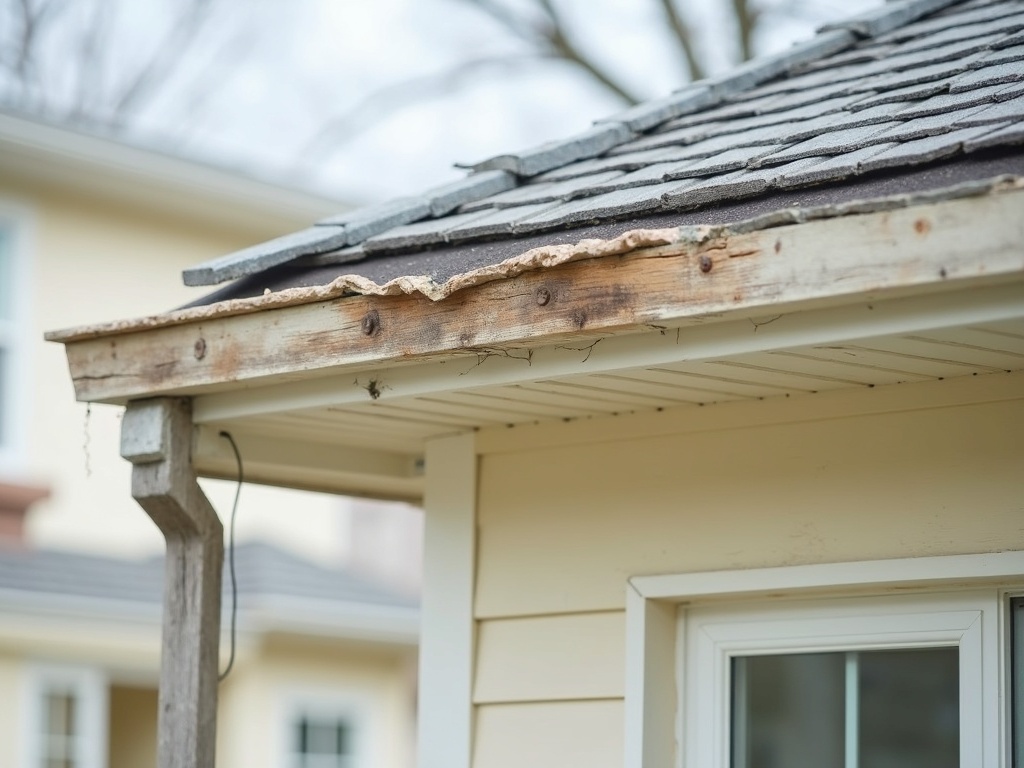
 What Is Soffit?
 Understanding Your Soffit System
Soffit is the horizontal panel that runs along the underside of your roof overhang. the surface you see when you stand at the edge of your home and look up toward the eaves. It connects the fascia board (the vertical board at the roof's edge) to the exterior wall of your house, sealing the eave from the outside world.
Properly installed soffit serves three critical functions. First, it seals the eave cavity against water, birds, squirrels, wasps, and other pests that would otherwise turn your attic into free real estate. Second, it ventilates your attic through perforations or slotted panels that allow airflow to circulate under the roof deck, reducing heat buildup in summer and preventing ice dams in winter. Third, it gives your home a finished, professional appearance by covering the rough framing and rafter tails that would otherwise be visible from below.
When soffit fails, all three functions fail simultaneously. A gap in the soffit is an open door for moisture, pests, and heat. and the downstream costs are significant. What starts as a $400 panel replacement becomes a $3,000 rafter and sheathing repair if left through a wet season.
Signs Your Soffit Needs Repair
Walk the perimeter of your home and look up at the underside of your eaves. These are the warning signs that indicate soffit repair is needed:
- Visible sagging or detached sections. panels pulling away from the fascia or wall, often caused by rot in the nailing channel or wind damage
- Peeling or bubbling paint. on wood soffit, this almost always indicates moisture trapped behind the panel; the soffit itself is failing even if it looks structurally sound
- Holes, gaps, or chewed edges. squirrels, birds, and woodpeckers regularly exploit soft wood soffit; a dime-sized hole is all a squirrel needs to enter your attic
- Staining or dark discoloration. moisture that has been penetrating the soffit for multiple seasons often leaves telltale staining patterns on the panel face
- Ice dams forming along your roofline in winter. blocked or missing soffit vents prevent attic air circulation, causing warm air to melt snow at the roof peak that then refreezes at the cold eaves
- Interior ceiling stains near exterior walls. water channeling in through soffit gaps travels along framing before appearing on ceilings, sometimes far from the actual entry point
- Soffit panels in your yard after a storm. wind-blown sections indicate the entire run may need re-securing or replacement
How Professional Soffit Repair Works
Every soffit repair starts with a proper diagnosis. which most DIY approaches skip entirely. A Soffit Fascia Repair professional will inspect from the ground and from a ladder, examining not just the damaged area but the surrounding structure:
- Full eave inspection: The contractor examines the soffit, fascia, gutter line, and roof edge together. Damage rarely appears in isolation. a rotted soffit section usually has a related gutter or fascia problem driving the moisture.
- Root cause identification: Before any panels are replaced, the cause of the damage is confirmed. Replacing a rotted panel without fixing the leaking gutter that caused the rot is a guaranteed callback. The root cause is fixed first.
- Material matching: The replacement panels are sourced to match your existing soffit profile, material type, and color as closely as possible. For aluminum soffit, paint matching is standard. For discontinued vinyl profiles, a parts search is done first.
- Structural repair if needed: If the nailing channel, lookout boards, or rafter tails behind the soffit show rot, those are repaired before the new panels are installed. Putting new soffit over rotted framing is another guaranteed callback.
- Panel installation and sealing: New panels are cut, fitted, and secured according to the manufacturer's specs for your climate zone. Vented sections are confirmed to be correctly positioned for proper attic airflow.
- Pest exclusion if applicable: For animal entry repairs, all adjacent entry points are also sealed. not just the one the homeowner can see. Contractors know the typical secondary entry points and address them all in one visit.
Soffit Repair Cost. What to Expect
Soffit repair pricing varies by the extent of damage, material type, and how much structural work is needed behind the panels. General ranges for homeowners to know:
| Job Type | Typical Range |
|---|---|
| Small hole or gap repair (1–2 panels) | $150–$350 |
| Section replacement (8–15 linear feet) | $400–$700 |
| Full run one side of house (20–40 LF) | $700–$1,400 |
| With structural framing repair | Add $300–$800 |
| Pest exclusion add-on | Add $150–$400 |
Note: These are national averages. Regional labor costs, material availability, and access difficulty affect final pricing. Your written estimate will be itemized and specific to your home. The inspection is always free.
Soffit Materials Explained
The three main soffit materials each have different strengths, and the right choice depends on your climate, home age, and budget:
Aluminum soffit is the industry standard for most American homes built after 1980. It doesn't rot, accepts paint, expands and contracts with temperature changes without warping, and holds up well in high humidity. Aluminum soffit comes in solid and vented profiles and is available in dozens of colors. It typically lasts 30–50 years when properly maintained.
Vinyl soffit is the most affordable option and the lowest maintenance. No painting required. ever. The downside is that vinyl can become brittle in extreme cold and may crack in climates with severe freeze-thaw cycles. It also has a more limited color selection than aluminum. For homeowners in mild climates on a tighter budget, vinyl performs well.
Wood soffit is found on older homes and continues to be used on historic or custom homes where the profile needs to match period-correct details. Wood looks beautiful but requires regular painting and sealing. the number one cause of soffit failure in older homes is neglected wood maintenance. Most contractors recommend converting to aluminum or vinyl when replacing wood soffit on non-historic homes.
Why Proper Attic Ventilation Matters
Soffit vents do more than most homeowners realize. A properly ventilated attic. using a balanced system of soffit vents at the eaves and ridge vents at the peak. prevents two of the most expensive home repair scenarios:
In summer, proper soffit ventilation allows hot air trapped in the attic to escape through the ridge, reducing attic temperatures that can otherwise reach 150°F+. This dramatically extends the life of your roofing materials and reduces cooling costs.
In winter, soffit vents allow cold exterior air to enter the attic, keeping the roof deck cold and preventing snow from melting unevenly. Without this cold air intake, warm interior air leaking into the attic melts snow at the peak, which runs down and refreezes at the cold eave. creating ice dams that force water under your shingles.
When replacing soffit, contractors confirm that vented sections are correctly positioned and that insulation hasn't been blown over the vents in the attic. another common problem that defeats soffit ventilation entirely.
Frequently Asked Questions
Common questions homeowners ask before calling about soffit repair — what causes it, what it costs, and what the repair process looks like from start to finish.