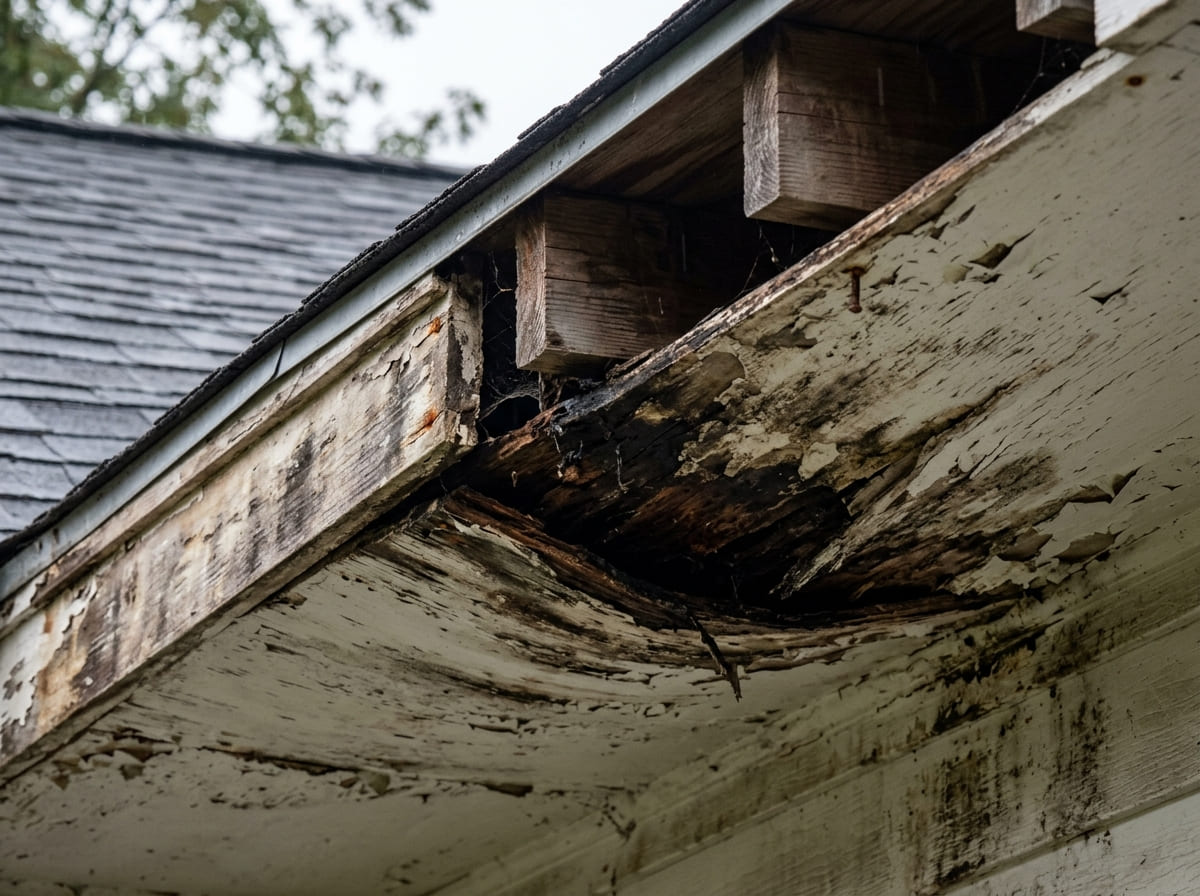
The soffit is the horizontal board that closes off the underside of your roof overhang, running between the outer edge of the eave and the wall of the house. When it rots, panels sag, pests find their way in, and the rafter tails and sub-fascia behind it are usually next. But soffit rot is not really an age problem or a rain problem — it is a moisture-source problem, and the source is often surprising. Unlike fascia, which mostly rots from water on its outer face, soffit frequently rots from the inside, driven by humid attic air. Identify the true source, and the repair lasts. Miss it, and the replacement rots on the same timeline. Soffit Fascia Repair's professionals diagnose which of the five sources below is at work before any panel comes down.
The Basic Mechanism: Why Wood Soffit Rots
Wood rot is fungal decay. Wood-rot fungi digest the cellulose in wood fiber, and they need three things to grow: wood, temperatures above 40°F, and moisture above roughly 19% content. You can't remove the wood or change the temperature, so moisture control is the only real lever. Every cause below is a specific way moisture reaches the soffit and stays there long enough for decay to take hold — and the key insight is that for soffit, that moisture often arrives from above and behind, not from rain on the visible surface.
Cause 1: Poor Attic Ventilation and Condensation
This is the leading cause of soffit rot, and the least obvious. Your attic fills with warm, humid air — from bathrooms, cooking, and the household below. If the attic is poorly ventilated, that moist air has nowhere to go, so it condenses on the coldest surfaces it reaches: the underside of the roof deck and the interior of the soffit. Over time that condensation keeps the soffit wood damp from the inside, and rot establishes on a surface no amount of exterior inspection would reveal. This is why soffit rot so often appears with no visible outside water source at all.
The fix: Restore balanced attic ventilation. Soffit vents pull cool air in at the eave while ridge or gable vents exhaust warm air at the top — that airflow keeps the eave dry. When soffit rot is condensation-driven, the repair has to include confirming and restoring that ventilation path, or the new panel will rot the same way. Our guide on soffit vents and attic ventilation covers how the system is supposed to work.
Cause 2: Blocked Soffit Vents Trapping Humidity in the Eave
A close cousin of poor ventilation is blocked ventilation. Soffit vents are frequently choked off — by attic insulation pushed down into the eave, by paint sealing over the vent perforations, or by debris and pest nesting packed into the vent channel. When the vents can't breathe, humidity gets trapped inside the eave cavity itself, keeping the soffit and the framing around it damp.
This cause is common in homes where insulation was added without baffles to hold it back from the eave, and in older homes where decades of repainting have gradually sealed the vent slots. The rot appears in the eave cavity around the vents rather than at any exterior water line.
The fix: Clear the vent openings, install baffles to keep insulation off the eave, and where perforations are painted shut, restore or replace the vented panels. This restores the airflow that lets the eave dry.
Cause 3: Roof Leaks Reaching the Soffit
Water entering at the roof — through failed flashing, damaged shingles, or a compromised valley — doesn't always show up as a ceiling stain. Sometimes it runs down the roof deck and the rafters to the lowest point of the roof structure: the eave, where it saturates the soffit and fascia from behind. Because the water travels before it lands, the rot can appear far from the actual leak.
The fix: Trace and repair the roof leak first, then replace the water-damaged soffit and inspect the rafter tails behind it. Replacing soffit under an active roof leak is wasted work — the source has to be closed before the eave can dry and hold a repair.
Cause 4: Gutter Overflow Wicking Into the Soffit-Fascia Junction
Clogged gutters overflow, and while that water most obviously attacks the fascia, it also wicks into the joint where the soffit meets the fascia. From there it reaches the outer edge of the soffit and the sub-fascia behind it. On homes with heavy tree cover or infrequent gutter cleaning, this is a steady contributor to eave rot, and it often damages soffit and fascia together.
The fix: Keep gutters clear (twice yearly, more under heavy tree cover), correct any drainage or drip-edge problems, and repair the affected soffit and fascia together. This overlaps closely with the causes of fascia rot, which is why the two are usually inspected as one system.
Cause 5: Failed Paint on Wood Soffit
On older homes with wood soffit, paint is the moisture barrier. As the paint film ages and micro-cracks form, rain, dew, and humidity penetrate the wood surface. Over repeated wet cycles moisture accumulates faster than the wood can dry, and rot establishes where the paint film is most compromised — typically at panel edges and seams first. This cause is more gradual than the others and is accelerated dramatically in humid, high-UV climates like Florida's.
The fix: For early surface rot with a sound core, strip the failed paint, treat with a wood consolidant, and repaint with quality primer and topcoats. Where rot has penetrated deeper, replace the affected panel. Prevention is a regular repaint cycle — before the paint visibly cracks, not after.
How to Tell Which Cause You're Dealing With
Where the rot appears is the most reliable clue:
| Where the Rot Appears | Most Likely Cause |
|---|---|
| Underside of soffit, no exterior water source | Attic condensation / poor ventilation |
| Around the vents, inside the eave cavity | Blocked soffit vents |
| Localized patch away from gutters | Roof leak tracking down |
| Outer soffit edge at the fascia junction | Gutter overflow wicking |
| Panel edges and seams, top-down | Failed paint on wood soffit |
A professional inspection confirms the source and checks the rafter tails and sub-fascia behind the panel for secondary damage. This matters because replacing soffit without correcting the moisture source — especially attic humidity — produces the same failure again. Call (855) 606-2187 for a free inspection that identifies the root cause, and see our soffit repair cost guide for what the fix typically runs.
Frequently Asked Questions
What causes soffit to rot?
Sustained moisture — and on soffit, that moisture most often comes from inside, as humid attic air condenses on the underside of the eave in a poorly ventilated attic. Other causes are roof leaks that run down to the soffit, gutter overflow wicking into the soffit-fascia junction, blocked soffit vents trapping humidity in the eave, and failed paint on wood soffit. The rot itself is fungal decay that needs wood above 19% moisture content.
Can soffit rot if it's vinyl or aluminum?
The vinyl or aluminum panels don't rot, but the wood behind and above them does — the sub-fascia, rafter tails, and framing they're fastened to. Non-porous panels can actually trap humid attic air against that wood and hide the rot from view, so many homeowners with vinyl or aluminum soffit find advanced rot behind panels that look fine from the ground.
How do I know if my soffit is rotting?
Watch for soffit panels that sag or feel spongy, dark staining on the underside of the eave, peeling paint on wood soffit, gaps or daylight at seams, and a musty smell near the eaves. On vinyl or aluminum soffit, panels bowing or pulling from their channel signal that the wood they're attached to has softened. A ladder inspection confirms whether the rot is surface-level or structural.
Does replacing rotted soffit fix the problem for good?
Only if the moisture source is corrected at the same time. Replacing the panel resets the clock on the wood, but if the attic stays under-ventilated, the roof still leaks, or the gutters still overflow, the new soffit rots on the same timeline. Because attic humidity is the leading cause, a complete repair often includes restoring soffit vent airflow and confirming attic ventilation, not just swapping the visible panel.
How fast does soffit rot spread?
It depends on climate and how constant the moisture is. In humid regions or where attic ventilation is poor, soffit rot can move from a soft spot to structural decay in the rafter tails within one to two seasons. In drier climates it may take several years. Because soffit rot is often driven by year-round attic humidity, it tends to spread steadily rather than seasonally — which is why it's frequently advanced by the time it's visible from below.