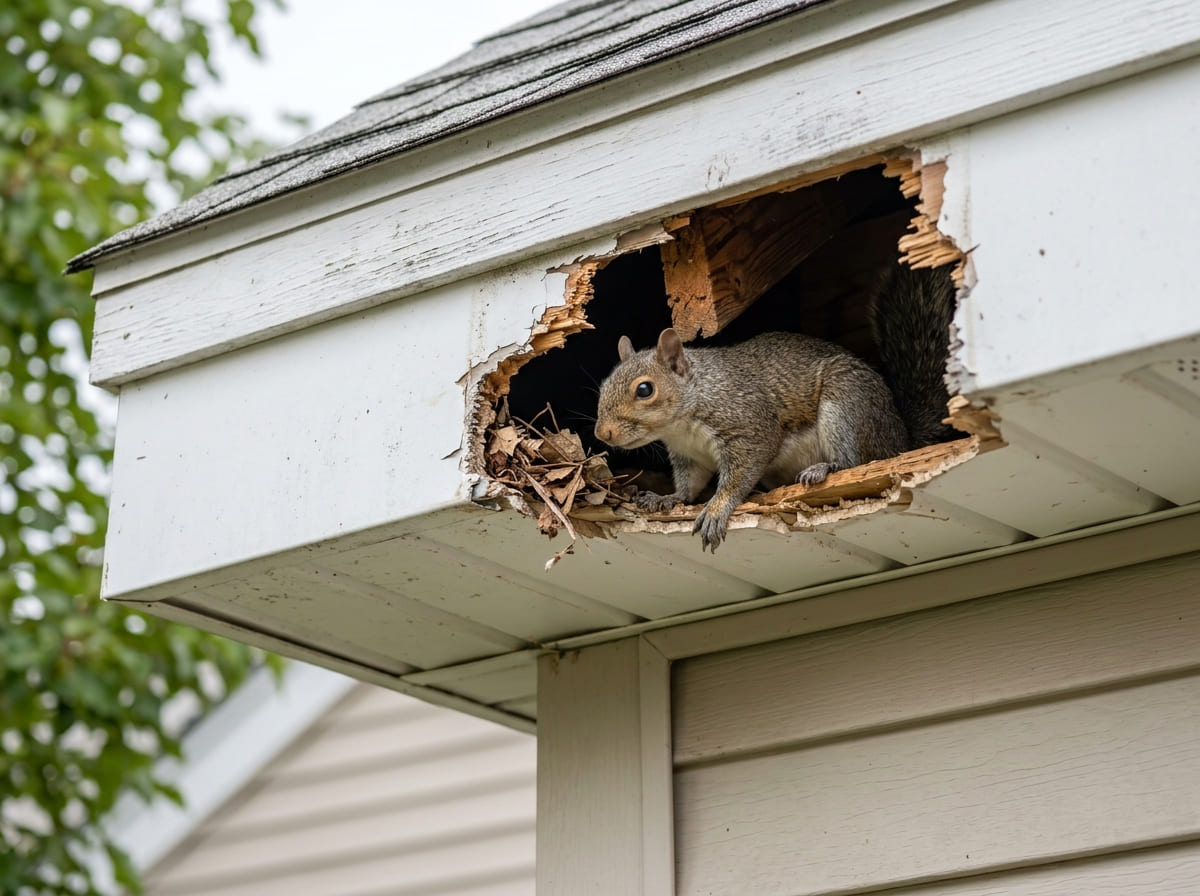
Animal damage to soffit is one of the most common eave problems homeowners call about, and it almost always follows the same story: a small, unrepaired gap in the soffit invited a squirrel, bird, rat, or bat inside, and by the time anyone noticed, the animal had widened the opening and nested in the attic. Repairing the visible hole is the easy part. The part that determines whether the problem comes back is sealing the exact entry point the animal exploited and correcting the soffit defect that created it. Soffit Fascia Repair's professionals treat every animal-damage job as an exclusion repair first and a cosmetic repair second — because a patch that doesn't stop re-entry isn't a fix.
How Animals End Up in Your Soffit
Animals rarely break into a sound, intact soffit. They find a weakness that already exists and exploit it. The soffit is the horizontal underside of your roof overhang, and it is full of the kinds of gaps animals look for: seams where panels meet, the joint where soffit meets fascia, vent openings, and any spot where a panel has warped, rotted, or pulled loose from its channel.
Once an opening exists, the animal's own biology takes over. Squirrels and rats are rodents with continuously growing teeth, and they will gnaw a pencil-width gap into a fist-sized hole in a single afternoon. Birds — especially starlings and house sparrows — slip through soffit vents and existing gaps to nest in the protected eave cavity. Bats need only a 3/8-inch opening, smaller than the gap most homeowners would ever notice. What all of them share is that they entered through a soffit that had a defect, which is why animal damage and deferred soffit maintenance are so closely linked.
Signs You Have Animal Damage — Not Just Wear
Ordinary soffit wear and animal damage look different once you know what to watch for. The signs of an active or recent animal problem include:
- A ragged, chewed-looking hole rather than a clean crack or a weathered seam
- Scratching, scurrying, or fluttering sounds in the eaves or attic, especially at dawn and dusk
- Nesting material — twigs, insulation, leaves — protruding from a soffit gap or vent
- Droppings or dark staining below a soffit vent or panel seam
- Grease marks or a worn "runway" along the fascia where an animal repeatedly enters
Why Sealing the Entry Point Comes First
The single most important rule with animal soffit damage is sequence: the animal has to be out before the soffit is sealed. Sealing a panel with a squirrel, rat, or bat still inside traps it in the attic, where it will do one of two things — claw and gnaw its way out through a new opening, causing fresh damage, or die inside the wall or eave, leaving an odor problem and a secondary attractant for insects. Neither is acceptable, and no reputable contractor will close an active entry point without confirming the space is clear.
The correct order of operations is straightforward. First, confirm the animal and any young are out — for many species this means a professional wildlife trapper handles removal, particularly during nesting season when young may be present. Second, seal the exact gap the animal used. Third, repair or replace the damaged soffit panel and inspect the fascia and rafter tails behind it for secondary damage. A contractor who skips the removal step or seals an active hole is creating a bigger problem than the one you called about.
What Proper Animal-Damage Repair Involves
An exclusion-grade soffit repair is built to resist re-entry, not just to cover a hole. Where gnawing animals like squirrels and rats are involved, that means reinforcing the entry area with rot-resistant material or metal flashing that teeth can't easily reopen, because these animals return to known entry points and will test a soft patch. Where birds or bats are the issue, it means fitting proper vent guards and sealing gaps down to the sizes those species can't pass.
Just as important is correcting the underlying defect. The animal got in because the soffit had a weakness — a rotted panel, a lifted seam, a corroded vent, or a gap at the fascia junction. If that defect isn't addressed, a new animal will eventually find the same weakness. This is why animal-damage repair so often overlaps with moisture repair: the rot that softened the panel enough for a squirrel to breach it is the same rot that needs a proper fix. If the fascia behind the soffit has water damage, that gets addressed at the same time through fascia repair.
What Animal Soffit Repair Costs
Pricing depends on how far the damage spread before it was caught. The ranges below reflect typical repair scope:
| Scope | Typical Cost |
|---|---|
| Single soffit panel + entry-point sealing | $300–$800 |
| Multiple panels or fascia/rafter-tail damage | $800–$2,500 |
| Wildlife removal (separate, licensed trapper) | $200–$600 |
| Nesting cleanup + droppings sanitation | $150–$500 |
Most homeowners are surprised that insurance rarely helps here. Standard policies exclude rodent, bird, and insect damage as a maintenance issue, so animal soffit repair usually comes out of pocket — which is the strongest argument for fixing a minor soffit gap before an animal finds it. For a fuller breakdown of soffit pricing, see our soffit repair cost guide.
Prevention: Close the Door Before They Find It
Every animal-damage job we see started as a small, fixable soffit defect. The most effective prevention is keeping soffit panels sound and seated, vents intact and screened, and the soffit-to-fascia junction sealed. Because animal entry so often follows moisture rot, keeping gutters clear and fascia sound removes the softening that creates the openings in the first place. If you've already noticed a gap, a warped panel, or a corroded vent, that is the moment to act — closing it now costs a fraction of what it costs after something moves in. Call (855) 606-2187 for a free inspection.
Frequently Asked Questions
How do animals get into a soffit?
Animals exploit gaps that already exist — a lifted or rotted soffit panel, a gap where the soffit meets the fascia or wall, a corroded vent, or a warped panel that pulled away from its channel. Squirrels and rats gnaw a small gap into a full entry hole, birds slip into vents and existing openings, and bats need only a 3/8-inch gap. Nearly every entry point starts as a minor soffit defect that went unrepaired.
How much does it cost to repair animal damage to soffit?
A single-panel repair with entry-point sealing typically runs $300–$800. If the animal damaged multiple panels or the fascia and rafter tails behind the soffit, expect $800–$2,500. Wildlife removal by a licensed trapper is a separate service, generally $200–$600, and nesting cleanup adds $150–$500. Insurance usually won't cover it, since animal damage is typically excluded as a maintenance issue.
Should I remove the animal before repairing the soffit?
Always. Sealing a soffit with an animal still inside traps it in the attic, where it will either force a new exit — causing more damage — or die inside the eave. The correct sequence is to confirm the animal and any young are out (or have them professionally removed), then seal the entry point and repair the soffit. A reputable contractor won't seal an active entry point without confirming the space is clear.
Will patching the soffit stop animals from coming back?
Only if it's done as a proper exclusion repair. A cosmetic patch won't stop a determined squirrel or rat from reopening it. Lasting repair means reinforcing the entry area with rot-resistant material or metal flashing where gnawing animals are involved, sealing the original gap, and correcting the soffit defect that created the opening. Animals return to known entry points, so the repair has to be built to resist re-entry.
Is animal soffit damage covered by homeowners insurance?
Usually not. Most policies exclude damage from rodents, birds, and insects as a preventable maintenance issue. There are occasional exceptions for sudden damage from a larger animal, but routine squirrel, rat, bird, or bat soffit damage is typically the homeowner's responsibility — which is why closing a minor soffit gap early is worth doing before an animal finds it.