Soffit & Fascia Repair Near Eugene
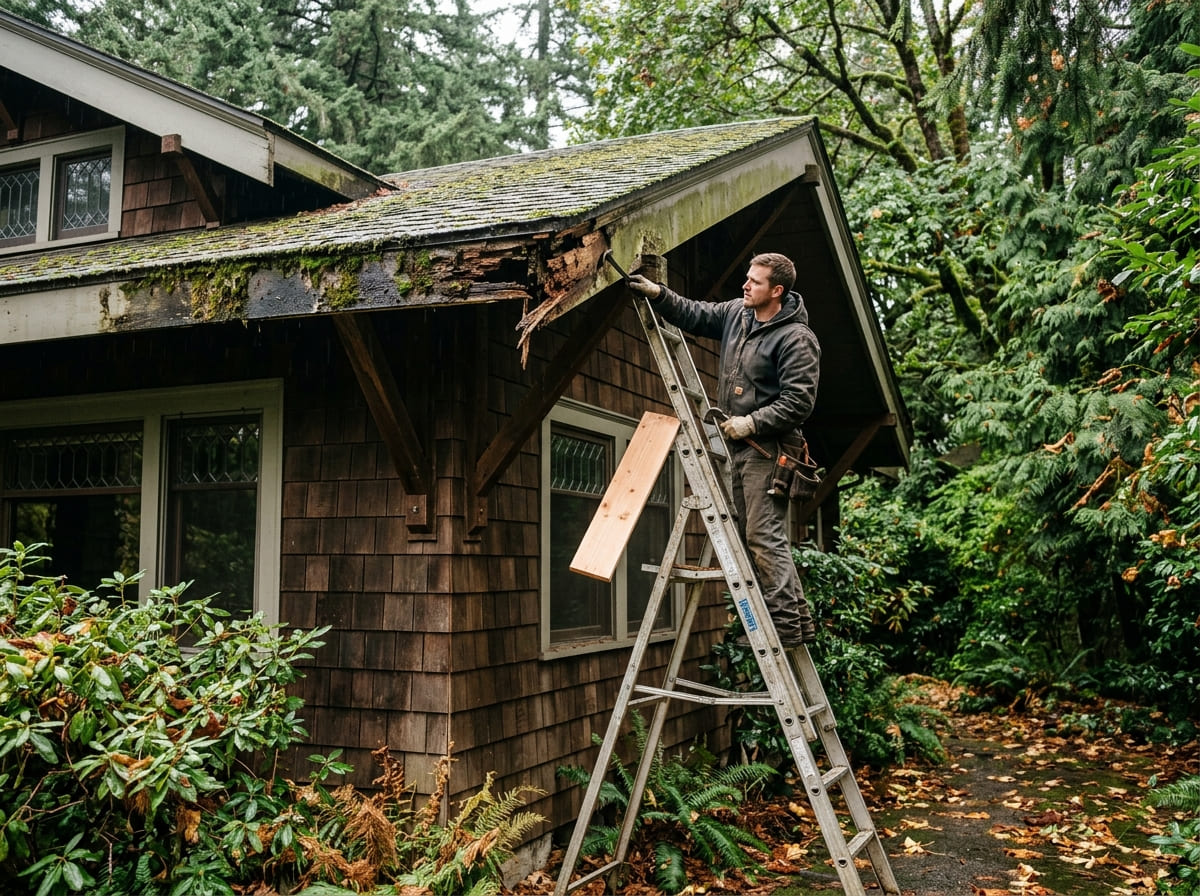
Eugene sits at the south end of Oregon's Willamette Valley, where a wet marine climate delivers a long rainy season from October into June and one of the greenest tree canopies of any city its size — conditions that keep soffit and fascia damp and shaded for much of the year. Soffit Fascia Repair serves Eugene homeowners across every neighborhood.
The city's older core — the early-1900s homes and Craftsman bungalows of the Whiteaker and College Hill, the established streets of South Eugene and Friendly — carries original wood fascia and deep, canopy-shaded overhangs, while River Road and the newer outskirts add mid-century and later stock. What unites them is shade and rain. Eugene's dense urban forest of firs, maples, and oaks shades whole rooflines and drops a steady load of needles, leaves, and organic debris into gutters and onto eaves, and the long wet season keeps north-facing soffit and fascia from ever drying fully. The result is the classic valley moss line — green growth creeping across shaded eaves and roof edges — and the slow, moisture-driven rot that follows it. There is little hard freeze here; like Seattle to the north, Eugene's problem is water that lingers, amplified by a canopy that keeps the sun off the wood.
What Eugene Homeowners Actually Find on Inspection
Moss and shade-driven moisture are the defining Eugene findings. The city's heavy tree canopy keeps north and east eaves in near-permanent shade through a rainy season that runs most of the year, so soffit panels and fascia tops grow moss and algae that trap water against the wood and lift the soffit-to-fascia seam. Original wood fascia in the Whiteaker and College Hill shows the result first, softening quietly at the gutter line while the street-side face still looks sound.
Canopy debris is the accelerant. Firs, maples, and oaks drop needles and leaves into gutters year-round, and clogged gutters overflow straight down the fascia through Eugene's long wet months — the single most common driver of fascia rot here. Where gutters pull away from softened boards, the water finds the sub-fascia and rafter tails behind them. Deferred paint on older wood fascia fails faster under constant damp, and vented soffits packed with organic debris lose the airflow that would otherwise help the eave dry. Because hard freezes are rare, ice isn't the issue — it is the combination of shade, rain, and falling debris that keeps Eugene eaves wet long enough for decay to take hold.
Neighborhoods We Serve in Eugene
Soffit and fascia contractors serving Eugene are available throughout the metro area and surrounding communities, including:
Beyond these neighborhoods, contractors cover the broader Eugene metro area. If you're just outside the city limits in an unincorporated area of OR, call to confirm coverage. most Pacific Northwest contractors extend their service area by 15–20 miles.
Soffit Fascia Repair also serves other OR communities, including Portland, Salem, Richland, Tacoma. Browse all our near-me service areas.
Services Available in Eugene, Oregon
- Soffit Repair. spot fixes for damaged, sagging, or pest-damaged soffit panels
- Fascia Repair. fix rotted boards, address the water source, re-hang gutters correctly
- Soffit Replacement. full tear-off and new installation when the damage is system-wide
- Fascia Replacement. new boards with aluminum capping and drip edge
- Gutter Installation. seamless aluminum gutters sized for Eugene's precipitation
What to Expect From the Free Inspection
When you call (855) 606-2187 and describe your situation, a Soffit Fascia Repair professional will schedule a free on-site inspection at your Eugene home, typically within 24–48 hours. The inspector will:
- Examine the soffit, fascia, and gutter condition from the ground and from a ladder at the affected areas
- Identify the root cause of damage. not just the visible symptoms
- Document the damage with photos for your records
- Provide a written, itemized estimate before leaving the property
- Explain repair options clearly, including what happens if you delay
There is no obligation to book. The inspection and estimate are completely free, regardless of whether you hire the contractor.
Soffit & Fascia Repair Cost in Eugene
Eugene pricing runs near the national benchmark, generally a little below the Portland metro to the north. Older homes in the Whiteaker and College Hill with original wood fascia and detailed Craftsman eaves price above standard because they need profile-matched carpentry rather than panel swaps — and because a lasting repair here means addressing the moss, the clogged-gutter overflow, and any rot already behind the board, not just the visible surface. Moss remediation and gutter cleaning are often bundled with the repair. Scheduling fills quickly during the drier summer window when most exterior work in the valley gets done.
Typical ranges for Eugene and the surrounding Pacific Northwest area:
| Service | Typical Range in Eugene |
|---|---|
| Soffit spot repair | $300–$800 |
| Fascia board replacement (per board) | $200–$500 |
| Full soffit replacement (per side) | $700–$1,500 |
| Full perimeter. average home | $2,000–$5,000 |
Frequently Asked Questions — Eugene, OR
Why is there so much moss on my Eugene eaves, and does it matter?
Moss is almost a given on shaded Eugene eaves, and it does matter. Between the Willamette Valley's long rainy season and Eugene's exceptionally dense tree canopy, north- and east-facing soffit and fascia sit in the shade and stay damp for most of the year — ideal conditions for moss, algae, and lichen. The trouble is that moss holds moisture against the wood and metal like a sponge, so the eave stays wet long after the rain stops. On soffit panels and along the top of the fascia, that trapped dampness lifts seams, works into the joint where soffit meets fascia, and feeds rot in the wood underneath. It also builds up in gutters and at the roof edge, adding to the overflow that runs down the fascia. Clearing the moss is worthwhile, but on an older home it usually needs to be paired with an inspection of the damage already done beneath it and a fix for why the eave stays so wet.
The trees around my house drop constant debris — how is that damaging my soffit and fascia?
In a canopy-heavy city like Eugene, tree debris is one of the leading causes of eave damage. The firs, maples, and oaks that shade so many neighborhoods drop needles and leaves into your gutters more or less year-round, not just in autumn, and packed gutters can't drain. Through Eugene's long wet season, that overflow sheets straight down the face of your fascia board — the single most common way fascia rots here. If the gutters have already pulled away from a softened board, the water gets behind it and reaches the sub-fascia and rafter tails. The same debris packs into vented soffit panels and chokes off the airflow that would help the eave dry between rains. Keeping gutters and soffit vents clear makes a real difference, but where debris-driven overflow has already caused rot, the affected boards need repair along with correcting the drainage.
Is soffit repair covered by homeowners insurance in OR?
Storm damage. wind, hail, and falling tree limbs. is typically covered under standard homeowners policies in Oregon. Long-term moisture damage and pest damage are usually excluded as maintenance issues. Contractors document damage thoroughly to support insurance claims when applicable.
How long does a Eugene soffit repair typically take?
Most spot repairs take 2–4 hours. Full section replacement on one side of the home takes a full day. Full perimeter replacement takes 2–3 days. You'll receive a specific timeline in the written estimate before work begins.