Why Coral Gables Homeowners Need Specialized Soffit & Fascia Service
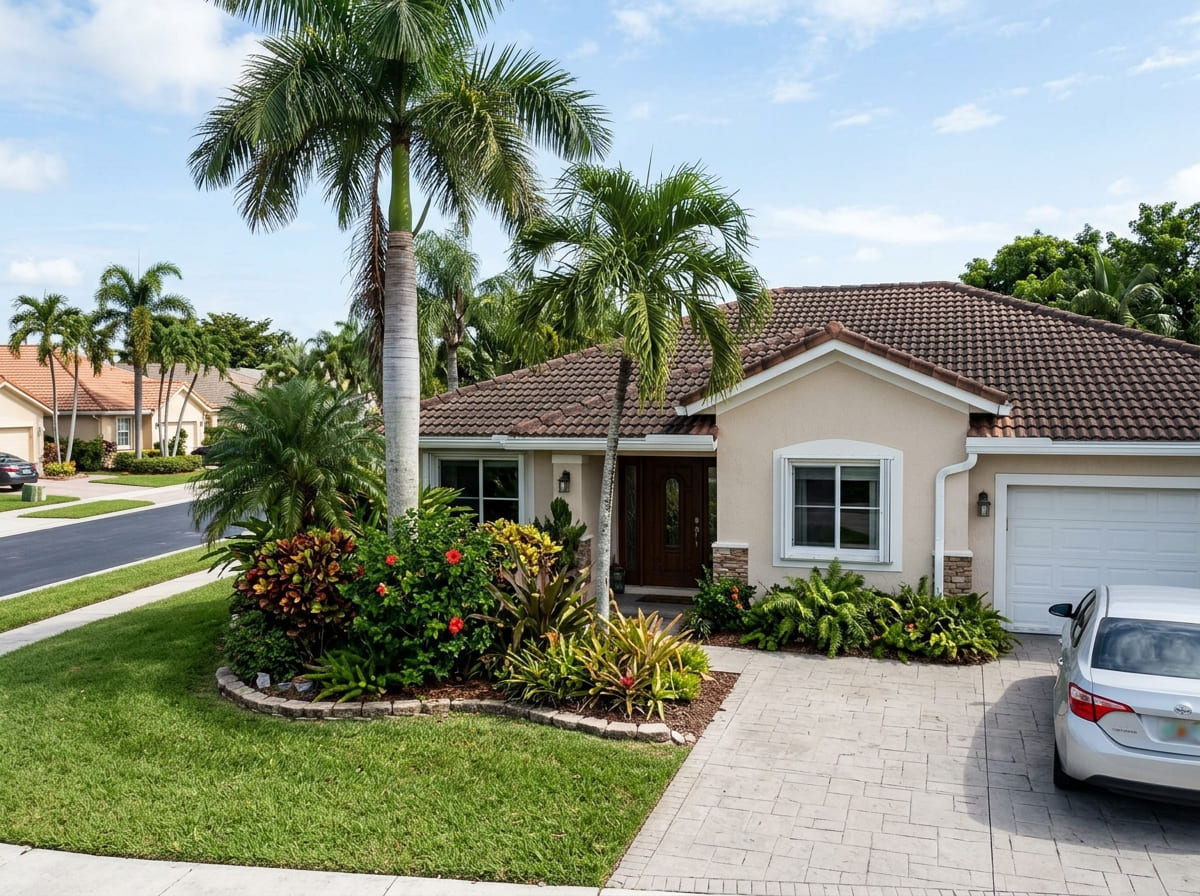
We repair and replace soffit and fascia for Coral Gables homeowners, from the larger lots in Cocoplum and Gables Estates to the older streets of the Riviera and Hammock Lakes. The Gables is also one of the greenest cities in Miami-Dade, with mature oaks and banyans overhanging many roofs. That shade is pleasant, but it keeps eaves damp, drops debris into gutters and holds moisture against the wood. Neighboring Miami and Doral share the county's climate, though the building stock here is distinctly older.
What Coral Gables Homeowners Find on Inspection
Heavy clay or concrete tile adds to the picture. Tile roofs carry real weight at the roof edge, and when a gutter or the roof edge detail lets water get behind the fascia, the damage can travel into the framing before it shows. Mature trees compound it: leaves and seed pods collect in gutters, the gutter overflows onto the board, and the canopy keeps the eave in shade where it stays wet longer. Many Coral Gables homes also have details such as decorative brackets, exposed beams and curved eave lines, so matching profiles takes more care than on a standard suburban ranch. Because the city has design review rules that can apply to visible exterior work, we recommend confirming requirements for your address before changing the look of the roof edge.
- 1920s Mediterranean Revival homes with wide eaves, exposed wood rafter tails and original wood fascia — a primary roofline damage driver in Coral Gables and Miami-Dade County
- Heavy tile roofs that put weight and water load on the roof edge — a primary roofline damage driver in Coral Gables and Miami-Dade County
- Dense tree canopy dropping leaves and holding moisture against the eaves — a primary roofline damage driver in Coral Gables and Miami-Dade County
In Coral Gables the century-old wood is the whole story. A 1920s fascia board and its rafter tails have been through a hundred South Florida summers, and layers of paint hide the softness. Replacing only the visible board over damaged rafter ends gives you new wood attached to wood that keeps failing. Heavy tile roofs and canopy debris add weight and water to the same edge.
Neighborhoods We Serve in Coral Gables
We serve Coral Gables proper and the surrounding Miami-Dade County communities, including:
Coral Gables covers Cocoplum and Gables Estates, the Riviera and Hammock Lakes areas, the Biltmore and Granada Golf areas. Many homes have exposed rafter tails, decorative brackets and tile roofs, and the city's architectural review may apply to visible exterior changes. Tell us the neighborhood and whether the home has exposed rafter tails when you call.
That coverage area takes in the smaller communities around Coral Gables as well. Homeowners in South Miami, Pinecrest, Coconut Grove, Kendall and Palmetto Bay are all inside the standard service radius, and the same soffit and fascia board repair work is available in each — the roofline problems in these outlying areas are usually identical to what shows up in Coral Gables itself, since they share the same Miami-Dade County climate and much of the same era of housing stock.
Soffit Fascia Repair also serves nearby South Florida communities, including Miami, Fort Lauderdale, Boca Raton, West Palm Beach, Pompano Beach. See all our Florida service areas.
Services Available in Coral Gables, FL
- Soffit Repair. repair or match original wood soffit and eave details on 1920s Mediterranean Revival homes
- Fascia Repair. cut back rotted rafter tails to sound wood and splice in matching pieces
- Soffit Replacement. full replacement only where the original assembly is already lost, using the closest matching profile
- Fascia Replacement. milled wood or PVC fascia matched to the existing profile, with approvals suited to Miami-Dade
- Gutter Installation. gutters sized for tile roofs and canopy debris, finished to suit the architecture
After a Storm: What to Check on a Coral Gables Roofline
Hurricane Andrew in 1992 and Irma in 2017 both tested the Gables' century-old roofs, and mature canopy puts limbs on eaves in any strong storm. After a named storm, check the rafter tails and decorative brackets first, then the roof edge beneath any tile.
- Exposed rafter tails that have cracked, split or shifted.
- Decorative brackets or trim loosened or missing.
- Fascia with peeling paint and soft wood beneath.
- Tile near the roof edge that has slipped or cracked, letting water behind the fascia.
- Gutters crushed or pulled away by fallen limbs.
Take dated photos before cleanup, and keep fallen decorative pieces, since original trim can often be repaired. Miami-Dade is a high-velocity hurricane zone, so replacement materials generally need product approval and a permit may apply. The city's architectural review may also apply to visible changes, so tell us before work. Under current Florida law, a new claim must be reported within one year of the loss.
Soffit & Fascia Repair Cost in Coral Gables
Coral Gables jobs vary more in price than most Miami-Dade work because the roofline details vary so much. A simple run of fascia on a plain elevation is a smaller job than a section with exposed rafter tails, decorative brackets or custom profiles that must be milled or matched. Tile roofs can add careful access and protection to the labor. Ask for the estimate to separate wood repair, material matching and access so you can see where the cost comes from, and expect repairs that preserve an original profile to take more time than a standard replacement.
| Service | Typical Coral Gables Range |
|---|---|
| Soffit spot repair | $470–$1,300 |
| Fascia board replacement | $340–$880 |
| Full soffit replacement (per side) | $1,200–$2,400 |
| Full perimeter, average Coral Gables home | $3,300–$8,000 |
| Exposed rafter tail repair (per tail) | $150–$450 |
| Tile-roof access and protection (added) | $200–$600 |
Can you repair just the rotted part of a wood fascia or rafter tail on an older Coral Gables home?
Often yes. If the rot is limited, a section of fascia or the end of a rafter tail can be cut back to sound wood, repaired or replaced, and finished to match the rest of the roofline. That approach also preserves the original profile that gives older Gables homes their look. The inspection tells us how far the damage goes. If the wood is soft along most of a run, replacing that whole run is usually the better repair, and the written estimate shows both options.
Do trees around my Coral Gables house affect my soffit and fascia?
They can. Overhanging branches drop leaves and debris into gutters, which then overflow onto the fascia, and shade keeps the roof edge wet longer after every storm. Wood under that constant moisture rots sooner. Keeping gutters clear, trimming branches back from the roof and repairing the board at the first sign of soft paint or staining are the practical ways to slow it down.
How much does soffit and fascia repair cost in Coral Gables, FL?
Spot repairs in Coral Gables typically run $470–$1,300, and a full perimeter replacement on an average home runs $3,300–$8,000. Exposed rafter tail repair adds roughly $150–$450 per tail, and tile-roof access and protection roughly $200–$600. Jobs vary more than most because the roofline details vary so much.
Can just the rotted part of a wood fascia or rafter tail be repaired?
Often yes. We cut back to sound wood and splice in a matching piece, then seal and prime it, which preserves the original profile. Replacing only the visible board over damaged rafter tails would leave wood that keeps failing, so we probe both.
Do the trees around my Coral Gables house affect soffit and fascia?
Yes. Canopy shades the eaves, drops leaves into gutters and holds moisture against old wood, so rot develops sooner and overflow wets the fascia. Guards, larger outlets and rot-resistant materials help. Limbs can also contact the roof edge and need trimming.
Does insurance cover storm damage to soffit and fascia in Coral Gables?
Wind damage or a fallen limb in a storm is usually covered, subject to your deductible, though policies on older homes can differ. Rot is maintenance. The reporting window for a new claim in Florida is one year from the date of loss. Written findings and photos keep the two items separate.
When should Coral Gables homeowners schedule an inspection?
Before hurricane season starts on June 1, and before any repaint, since fresh paint can hide soft wood. Following a named storm, call as soon as conditions allow a ladder-up look. To schedule a roofline inspection, call (407) 708-9017.