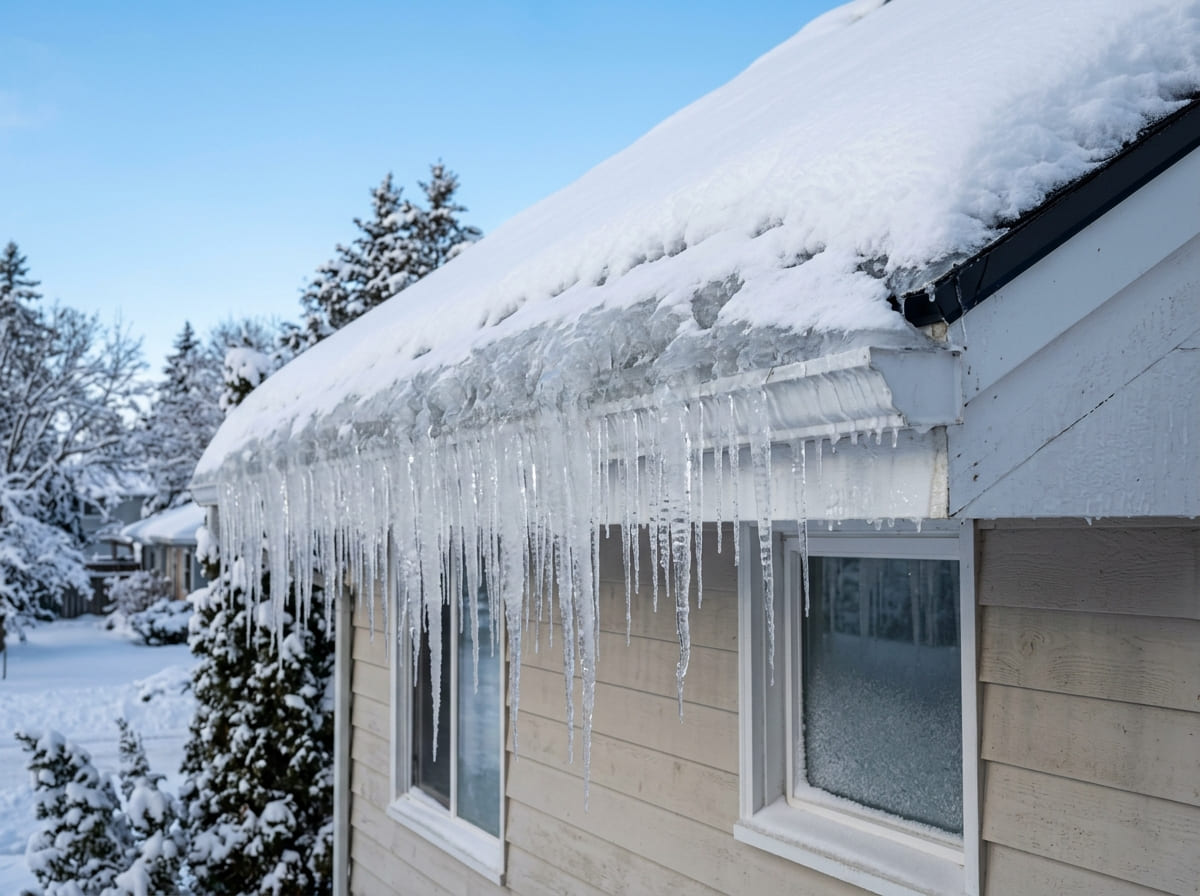
Homeowners in snowy regions from Minnesota to upstate New York to the inland Northwest know the sight: a thick ridge of ice along the edge of the roof, sometimes with icicles hanging from the gutter. It looks like a winter postcard, but that ice dam is actively forcing water into the eave, and by spring it can leave soffit and fascia soft, stained, and rotted. The frustrating part is that most homeowners fix the wrong thing — they repair the damaged eave or chip the ice off the roof, without addressing why the ice formed. Soffit Fascia Repair's approach treats ice-dam damage as a two-part problem: repair the eave, and correct the attic conditions that built the dam in the first place.
How an Ice Dam Forms
An ice dam is the result of an uneven roof temperature, and it happens in a predictable sequence. First, heat escaping from the living space into the attic warms the upper section of the roof deck above freezing. Second, the snow sitting on that warm upper roof melts and the water trickles downward. Third, that meltwater reaches the eave — the overhang that hangs over unheated space and stays below freezing — and refreezes there, building a ridge of ice. Finally, as the cycle repeats, the dam grows and meltwater pools behind it with nowhere to drain.
The critical point is that the weather doesn't cause ice dams — attic heat loss does. Two identical homes on the same street in the same storm can have completely different outcomes: the well-insulated, well-ventilated one keeps its roof deck uniformly cold and sheds snow evenly, while the one leaking attic heat grows a dam every winter.
What the Ice Dam Does to Your Soffit and Fascia
Once meltwater pools behind the dam, it has to go somewhere, and it goes where water always goes — down and in. It works its way under the shingles at the eave and into the roof structure, then saturates the components that make up the eave: the top of the fascia board, the sub-fascia behind it, the rafter tails, and the soffit below. This is water arriving from above and behind, soaking wood that the gutter system was never designed to handle and that has almost no chance to dry in the middle of winter.
The damage shows up in a recognizable pattern. Rot concentrates at the top of the fascia and in the eave cavity, worst on north-facing elevations where weak winter sun never melts the dam between storms. Soffit panels stain and sag as the wood behind them softens. In severe cases the same meltwater pushes past the eave into the attic insulation and down interior walls, turning an eave problem into a whole-house one. Because the melting-refreezing repeats through the season, a single bad winter can carry a previously sound eave into structural rot.
The Attic Is the Real Cause — And the Real Fix
Since ice dams come from attic heat loss, lasting prevention lives in the attic. Three measures work together:
- Air sealing the attic floor to stop warm, moist household air from leaking up and warming the roof deck
- Insulation to keep the heat that remains from reaching the underside of the roof
- Balanced ventilation — cold air in through the soffit vents, warm air out at the ridge — to keep the whole deck uniformly cold
That last measure is where soffit and ice dams connect directly. Soffit vents are the intake side of the ventilation system, drawing cold outside air into the attic at the eave. When those vents are blocked by insulation stuffed into the eave or by debris, the roof loses its cold-air intake and ice dams form more readily. This is why restoring soffit vent airflow — and installing baffles that hold insulation back from the eave — is part of a real ice-dam fix, not just an eave repair. Our guide on soffit vents and attic ventilation explains how the intake-and-exhaust balance is supposed to work.
Repairing the Damage After an Ice Dam
When an ice dam has already rotted the eave, the repair follows a clear order. The damaged fascia and soffit are removed, and the sub-fascia and rafter tails behind them are inspected for the deeper rot that ice-dam water tends to cause. Sound framing is treated or replaced as needed, then new fascia and soffit go back on with proper detailing. Crucially, the attic corrections happen alongside the eave repair — because a new soffit installed under an unchanged attic will meet the same meltwater next winter.
One more short-term consideration: never chip aggressively at an ice dam with metal tools to relieve it, which damages shingles and the eave. If a dam is causing an active interior leak mid-winter, controlled steam removal by a professional is the safe method, followed by the permanent attic fix once the weather allows.
What Ice-Dam Soffit Repair Costs
Eave repair after ice-dam damage typically runs from $800 for a limited section to $3,000+ when rot has reached the sub-fascia and rafter tails across multiple eaves. The attic corrections — air sealing, insulation top-up, and ventilation restoration — are a separate investment but the one that actually ends the cycle. Because sudden interior water damage from an ice dam is covered by many homeowners policies, documenting the damage promptly is worthwhile. For a fuller picture of eave pricing, see our fascia replacement cost guide. Call (855) 606-2187 for a free inspection.
Frequently Asked Questions
How do ice dams damage soffit and fascia?
An ice dam is a ridge of ice at the cold eave, formed when snowmelt from the warmer upper roof refreezes. As meltwater backs up behind it, it's forced under the shingles and into the eave, saturating the top of the fascia, the sub-fascia, and the soffit from above — wood the gutters were never designed to protect. Repeated over a winter, this causes rot and can push water into the attic and down interior walls.
What actually causes ice dams to form?
An uneven roof temperature. Heat escaping into the attic warms the upper roof deck above freezing and melts the snow on it; that meltwater runs down to the cold eave and refreezes into a dam. The root cause is attic heat loss — inadequate insulation and air sealing — combined with poor ventilation, not the weather itself. That's why two homes in the same storm can have very different outcomes.
Can soffit ventilation help prevent ice dams?
Yes — soffit vents are the intake side of the ventilation that prevents ice dams. Balanced ventilation draws cold air in through the soffit vents and exhausts it at the ridge, keeping the roof deck uniformly cold so snow doesn't melt unevenly. When soffit vents are blocked by insulation or debris, that intake is lost and ice dams form more readily. Clearing and restoring soffit vent airflow, with baffles to hold insulation off the eave, is part of a lasting fix.
Is ice dam damage covered by homeowners insurance?
Often, yes. Sudden interior water damage from an ice dam is covered by many standard policies, unlike gradual rot. Coverage usually applies to the resulting damage rather than to preventing the dam, and insurers may deny claims deemed the result of long-term neglect. Document the damage promptly with photos and check your specific policy, since ice-dam coverage varies by insurer and state.
How do I stop ice dams from coming back after repairing the soffit?
Repairing the eave is only the short-term half. The lasting fix addresses why the roof melted unevenly: air-seal the attic floor to stop warm air leaking up, add insulation to keep attic heat off the roof deck, and restore balanced soffit-to-ridge ventilation. Without the attic work, the replacement soffit faces the same meltwater the following winter.