Soffit & Fascia Repair Near Richmond
Richmond sits on the fall line of the James River in a humid subtropical zone where the Mid-Atlantic's long, damp summers, tropical-remnant rain events, and a winter that hovers around the freezing line combine to keep soffit and fascia systems under sustained and varied stress. Soffit Fascia Repair serves Richmond homeowners across all neighborhoods.
The Fan District and Church Hill carry some of the most significant historic housing in the American South — dense blocks of 1800s and early-1900s row houses and Victorians with original wood cornices, bracketed eaves, and elaborate painted trim that is architecturally protected and demanding to maintain. That century-old eave woodwork sits in Richmond's river-valley humidity, where the James keeps overnight moisture elevated and mature street-tree canopy shades north-facing cornices from the drying sun for much of the year. Midlothian, Short Pump, and Bon Air in the western and southern suburbs represent Richmond's modern growth — subdivisions built from the 1980s onward where builder-grade vinyl and aluminum soffit is reaching simultaneous end-of-life. Richmond also sits inland enough to be spared direct hurricane landfalls but squarely in the path of the tropical remnants that track up the Atlantic coast, delivering the extended wind-driven rain events that find every eave gap.
What Richmond Homeowners Actually Find on Inspection
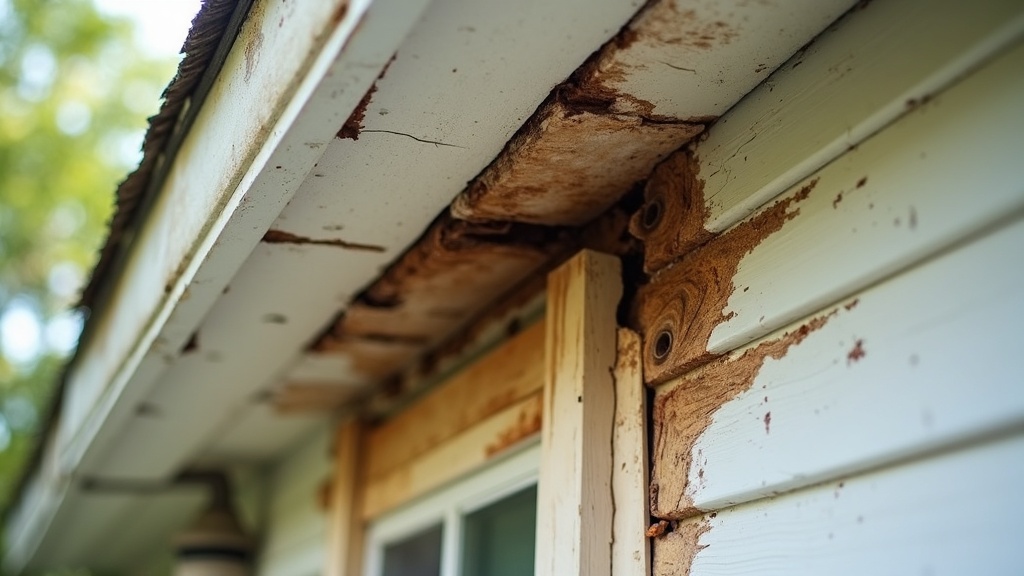
Historic cornice deterioration is the Richmond finding that most complicates repair on Fan District and Church Hill homes — the bracketed, built-up wood eaves on these 1800s row houses are not simple fascia runs, and rot that begins at a bracket joint or behind decorative trim can spread through the connected assembly before it surfaces through the paint. Richmond's river-valley humidity and dense tree canopy keep these ornate north-facing cornices damp longer after each rain, and repairing them correctly is carpentry and profile-matching work, not panel replacement — a distinction that surprises homeowners expecting a quick fix.
Tropical-remnant water intrusion is the acute driver. Storms that make landfall to the south routinely track inland over central Virginia as they weaken, dropping 4–8 inches of rain over many hours with 30–50 mph winds — an extended wind-driven soaking that finds gaps in aging soffit seams and behind failing cornice trim that a brief thunderstorm never would. Midlothian, Short Pump, and Bon Air's 1980s–2000s subdivision vinyl adds the simultaneous-aging pattern, with discoloration and corner separation appearing street-wide, and Richmond's marginal winter freeze adds occasional freeze-thaw stress on top of the year-round humidity load.
Neighborhoods We Serve in Richmond
Soffit and fascia contractors serving Richmond are available throughout the metro area and surrounding communities, including:
Beyond these neighborhoods, contractors cover the broader Richmond metro area. If you're just outside the city limits in an unincorporated area of VA, call to confirm coverage. most Mid-Atlantic contractors extend their service area by 15–20 miles.
Soffit Fascia Repair also serves other VA communities, including Pittsburgh, Lower Paxton, Reading, Lancaster. Browse all our near-me service areas.
Services Available in Richmond, Virginia
- Soffit Repair. spot fixes for damaged, sagging, or pest-damaged soffit panels
- Fascia Repair. fix rotted boards, address the water source, re-hang gutters correctly
- Soffit Replacement. full tear-off and new installation when the damage is system-wide
- Fascia Replacement. new boards with aluminum capping and drip edge
- Gutter Installation. seamless aluminum gutters sized for Richmond's precipitation
What to Expect From the Free Inspection
When you call (855) 606-2187 and describe your situation, a Soffit Fascia Repair professional will schedule a free on-site inspection at your Richmond home, typically within 24–48 hours. The inspector will:
- Examine the soffit, fascia, and gutter condition from the ground and from a ladder at the affected areas
- Identify the root cause of damage. not just the visible symptoms
- Document the damage with photos for your records
- Provide a written, itemized estimate before leaving the property
- Explain repair options clearly, including what happens if you delay
There is no obligation to book. The inspection and estimate are completely free, regardless of whether you hire the contractor.
Soffit & Fascia Repair Cost in Richmond
Richmond pricing runs close to the national benchmark, slightly below the Washington, D.C. metro to the north. Historic Fan District and Church Hill cornice work prices well above standard fascia jobs because bracketed, built-up eaves require carpentry-grade repair and custom profile matching, and work on architecturally protected homes may involve additional care to preserve original detailing. Suburban vinyl replacement in Short Pump and Midlothian prices at standard rates. Post-tropical-storm scheduling extends 2–4 weeks after any remnant system that tracks over central Virginia.
Typical ranges for Richmond and the surrounding Mid-Atlantic area:
| Service | Typical Range in Richmond |
|---|---|
| Soffit spot repair | $300–$800 |
| Fascia board replacement (per board) | $200–$500 |
| Full soffit replacement (per side) | $700–$1,500 |
| Full perimeter. average home | $2,000–$5,000 |
Frequently Asked Questions — Richmond, VA
Do hurricanes really affect Richmond soffit and fascia when the city is so far inland?
Yes — not from direct landfalls, but from tropical remnants. Storms that come ashore along the Gulf or the Carolinas frequently track inland and pass over central Virginia as weakening systems, and even a downgraded tropical storm or depression can drop 4 to 8 inches of rain over many hours with sustained 30 to 50 mph winds in the Richmond area. That extended, wind-driven soaking is fundamentally different from a brief summer thunderstorm: the water has hours to find and exploit any gap in aging soffit seams, behind failing cornice trim, or at fascia joints. Homes in the Fan and Church Hill with historic wood eaves are especially exposed. Scheduling a post-storm inspection after any tropical remnant that tracks over central Virginia is worthwhile even if the home looks undamaged from the street.
Why is eave repair on my Fan District or Church Hill row house more complex than on a modern home?
Because the eaves on Richmond's historic row houses are bracketed, built-up wood cornices — layered decorative assemblies with brackets, moldings, and trim typical of 1800s construction — not the simple flat fascia of a modern subdivision home. When rot starts at one bracket joint or behind a piece of decorative trim, it can travel through the connected assembly before it shows at the painted surface, and repairing it correctly means matching original wood profiles and rebuilding the assembly rather than swapping a panel. On architecturally protected homes there may also be a need to preserve original detailing. That makes Fan and Church Hill eave work a carpentry project requiring someone who understands historic cornice construction, which is why a careful hands-on assessment matters more here than on a modern home.
Is soffit repair covered by homeowners insurance in VA?
Storm damage. wind, hail, and falling tree limbs. is typically covered under standard homeowners policies in Virginia. Long-term moisture damage and pest damage are usually excluded as maintenance issues. Contractors document damage thoroughly to support insurance claims when applicable.
How long does a Richmond soffit repair typically take?
Most spot repairs take 2–4 hours. Full section replacement on one side of the home takes a full day. Full perimeter replacement takes 2–3 days. You'll receive a specific timeline in the written estimate before work begins.