Soffit & Fascia Repair Near Austin
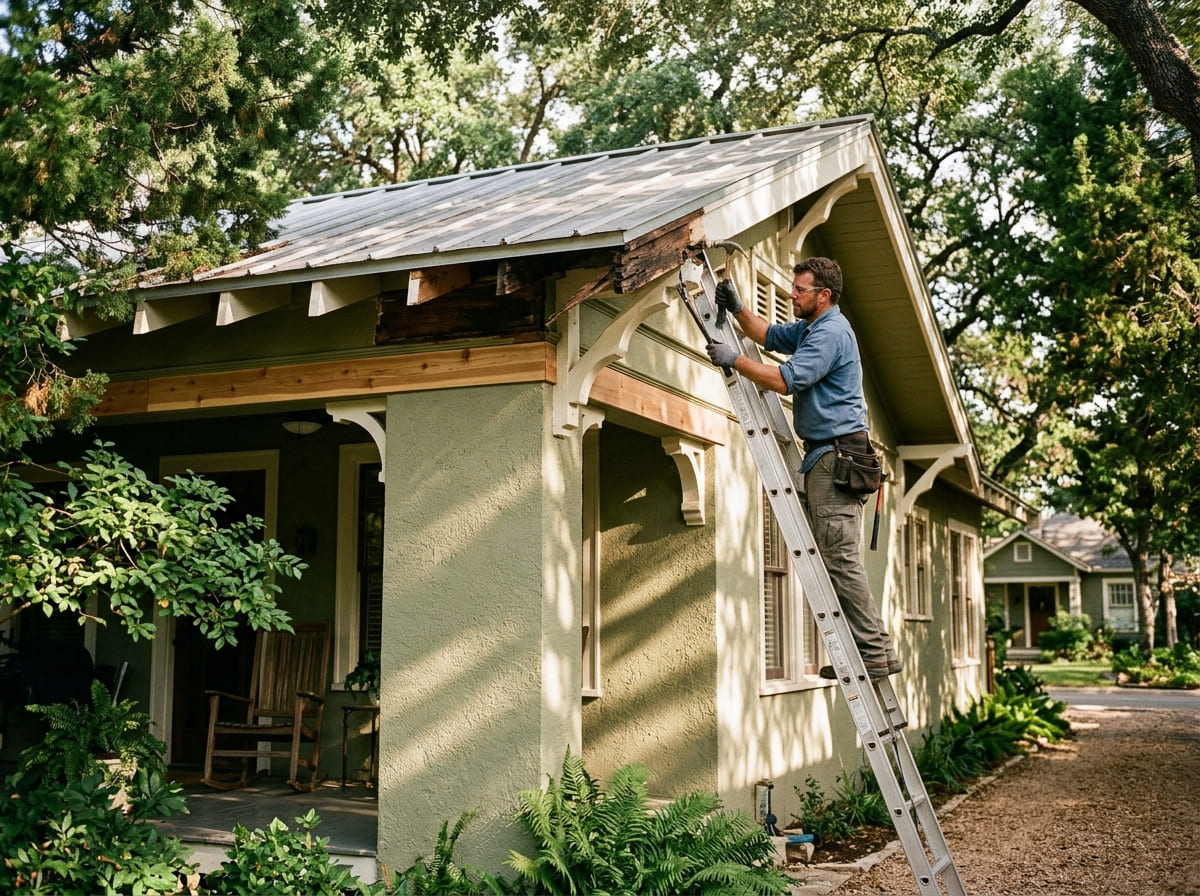
Austin sits on the edge of the Texas Hill Country where the Balcones Escarpment splits the city, in a humid subtropical climate that combines fierce Central Texas sun, flash-flood downpours, and one of the densest live-oak-and-cedar canopies of any Texas metro. Soffit Fascia Repair serves Austin homeowners across every neighborhood.
The older central neighborhoods carry Austin's most character-rich housing — the 1920s–1940s bungalows of Hyde Park, the tree-shaded homes of Travis Heights and Tarrytown — many with original wood eaves and exposed rafter tails sitting beneath a heavy canopy that shades them from the drying sun for most of the year. That shade protects paint but slows the drying of every rain, and Austin's cedar and oak canopy also drops debris that clogs soffit vents and traps moisture against fascia. The explosive growth of the tech era filled the outer rings — Circle C Ranch, the Mueller redevelopment, and the subdivisions pushing into the Hill Country — with 1990s-onward homes whose builder-grade vinyl and aluminum soffit is now aging together under intense UV. Between the sun-baked western eaves, the canopy-shaded northern ones, the clay soil that moves underfoot, and the flash floods that tear through the creeks, Austin rooflines face a distinctly local blend of stresses.
What Austin Homeowners Actually Find on Inspection
The sun-versus-canopy split is Austin's defining eave pattern, and it puts two different problems on one house. On sun-exposed south and west elevations — common on the open lots of Circle C and the newer Hill Country subdivisions — intense Central Texas UV chalks and embrittles vinyl soffit and fails fascia paint. On the canopy-shaded north and east eaves of Hyde Park, Travis Heights, and Tarrytown, the opposite develops: wood fascia and exposed rafter tails that never get drying sun stay damp after each rain and slowly rot behind intact-looking paint.
Canopy debris and flash flooding are the local accelerants. Austin's dense oak and cedar canopy sheds leaves, pollen, and cedar litter that pack soffit vents and gutters, trapping moisture right where the eave is most vulnerable — the Hyde Park bungalows with exposed rafter tails show softening at the tail ends first. Flash-flood downpours, the same Flash Flood Alley pattern that hits the whole I-35 corridor, overwhelm gutters and drive water into aging soffit seams. Expansive clay adds seasonal foundation movement that reopens eave joints, and the 1990s–2000s subdivision vinyl in the growth rings shows the simultaneous-aging pattern of fading and corner separation across entire streets.
Neighborhoods We Serve in Austin
Soffit and fascia contractors serving Austin are available throughout the metro area and surrounding communities, including:
Beyond these neighborhoods, contractors cover the broader Austin metro area. If you're just outside the city limits in an unincorporated area of TX, call to confirm coverage. most Central Texas contractors extend their service area by 15–20 miles.
Soffit Fascia Repair also serves other TX communities, including Lubbock, Houston, Dallas, San Antonio. Browse all our near-me service areas.
Services Available in Austin, Texas
- Soffit Repair. spot fixes for damaged, sagging, or pest-damaged soffit panels
- Fascia Repair. fix rotted boards, address the water source, re-hang gutters correctly
- Soffit Replacement. full tear-off and new installation when the damage is system-wide
- Fascia Replacement. new boards with aluminum capping and drip edge
- Gutter Installation. seamless aluminum gutters sized for Austin's precipitation
What to Expect From the Free Inspection
When you call (855) 606-2187 and describe your situation, a Soffit Fascia Repair professional will schedule a free on-site inspection at your Austin home, typically within 24–48 hours. The inspector will:
- Examine the soffit, fascia, and gutter condition from the ground and from a ladder at the affected areas
- Identify the root cause of damage. not just the visible symptoms
- Document the damage with photos for your records
- Provide a written, itemized estimate before leaving the property
- Explain repair options clearly, including what happens if you delay
There is no obligation to book. The inspection and estimate are completely free, regardless of whether you hire the contractor.
Soffit & Fascia Repair Cost in Austin
Austin pricing runs modestly above the national benchmark, reflecting the metro's higher labor and material costs and strong construction demand. Older Hyde Park, Travis Heights, and Tarrytown homes with exposed rafter tails and canopy-shaded wood fascia price above standard because rafter-tail and custom-profile repair take longer than panel swaps. Suburban vinyl work in Circle C and the outer subdivisions prices closer to standard. The long dry stretches of Central Texas summer are the natural window for exterior eave work.
Typical ranges for Austin and the surrounding Central Texas area:
| Service | Typical Range in Austin |
|---|---|
| Soffit spot repair | $300–$800 |
| Fascia board replacement (per board) | $200–$500 |
| Full soffit replacement (per side) | $700–$1,500 |
| Full perimeter. average home | $2,000–$5,000 |
Frequently Asked Questions — Austin, TX
My Hyde Park bungalow has exposed rafter tails — why do they rot before the rest of the eave?
Exposed rafter tails are the ends of the roof rafters that project past the wall, and on a 1920s–1940s Hyde Park bungalow they are a defining architectural feature — but they are also the most exposed wood on the house. Sitting under Austin's dense oak canopy, they rarely get direct drying sun, and the canopy constantly sheds leaves and cedar litter that pack into the eave and hold moisture right against that end-grain wood. End grain soaks up water far faster than a painted face, so the tail ends soften and rot while the fascia above still looks sound. Add the humidity that lingers on shaded eaves after every rain, and rafter tails become the first casualty. Repairing them well means treating or replacing the affected wood, matching the original profile so the bungalow keeps its look, and improving drainage and ventilation so the new wood does not follow the old — not simply wrapping the damage in aluminum.
How can one Austin house have sun-damaged eaves on one side and rotting eaves on the other?
It comes down to sun exposure, and Austin's heavy tree canopy makes the split unusually sharp. On the south and west-facing eaves that take the full Central Texas sun — most common on the open lots out in Circle C Ranch and the newer Hill Country subdivisions — ultraviolet exposure chalks and embrittles vinyl soffit and burns out fascia paint, a heat-and-light kind of damage. On the north and east-facing eaves shaded by big live oaks in Hyde Park or Tarrytown, the problem inverts: those surfaces never get drying sun, so moisture from rain and humidity lingers and works into the wood fascia and rafter tails behind paint that still looks intact. The same home can show brittle, faded soffit on its sunny side and slow moisture rot on its shaded side, which is why the elevations really need to be assessed separately rather than judged by whichever side you see from the street.
Is soffit repair covered by homeowners insurance in TX?
Storm damage. wind, hail, and falling tree limbs. is typically covered under standard homeowners policies in Texas. Long-term moisture damage and pest damage are usually excluded as maintenance issues. Contractors document damage thoroughly to support insurance claims when applicable.
How long does a Austin soffit repair typically take?
Most spot repairs take 2–4 hours. Full section replacement on one side of the home takes a full day. Full perimeter replacement takes 2–3 days. You'll receive a specific timeline in the written estimate before work begins.