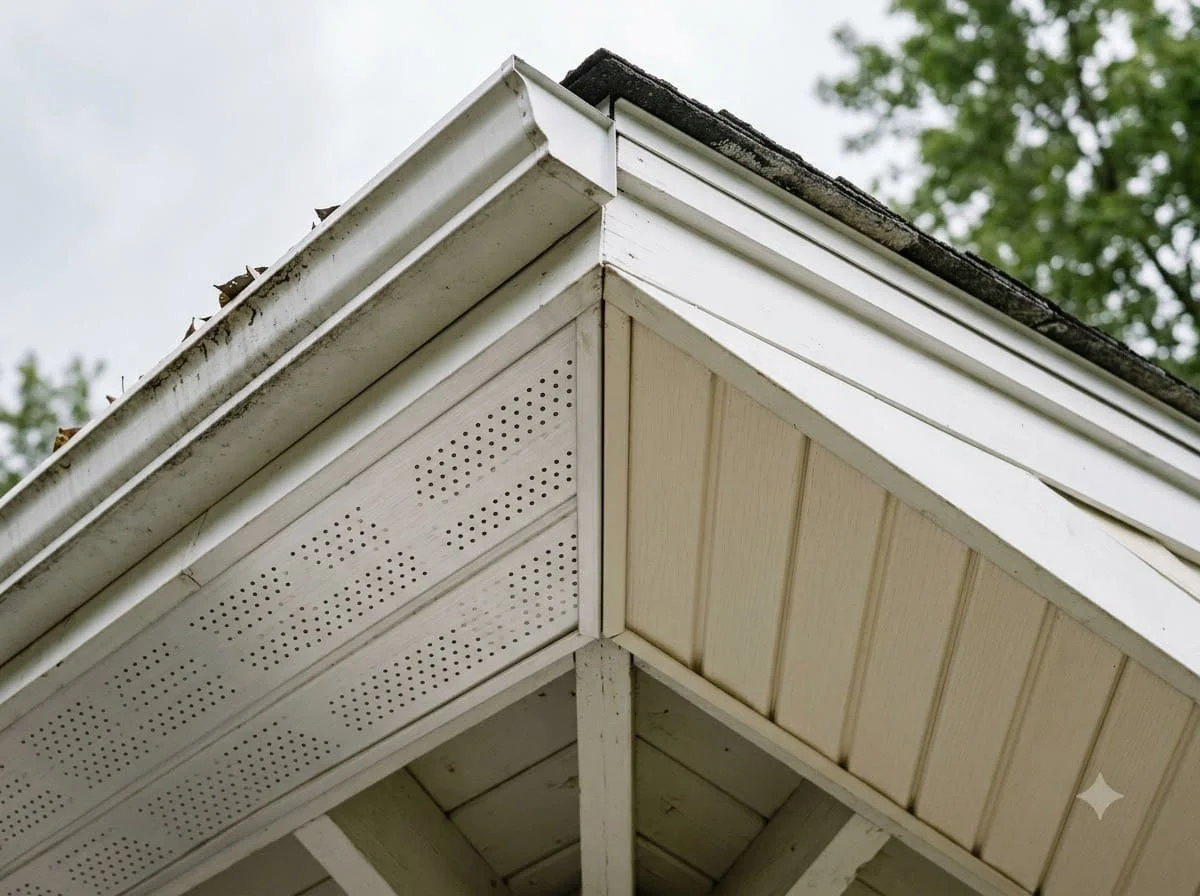
When your soffit needs replacement, the material decision comes down to two realistic choices for most homes: aluminum or vinyl. Wood is still used for historic matching, and fiber cement is available for premium applications, but the overwhelming majority of soffit replacements in the US use one of these two materials. Soffit Fascia Repair's licensed professionals make this recommendation on nearly every replacement job, so here's the honest comparison they walk homeowners through.
Quick Comparison
| Factor | Aluminum | Vinyl |
|---|---|---|
| Cost (installed) | $5–$10/LF | $4–$8/LF |
| Lifespan | 30–50 years | 20–30 years (mild climates) |
| Cold climate performance | Excellent | Poor below -10°F |
| Hot/UV climate performance | Very good | Fair (fades and embrittles) |
| Coastal/salt air | Good (marine-grade: excellent) | Fair |
| Paint/color options | Wide — accepts paint | Limited — color is integral |
| Maintenance | Low — repaint every 15–20 yrs | Very low — no painting |
| Impact resistance | Good (dents, doesn't crack) | Moderate (cracks in cold) |
Aluminum Soffit: When It's the Right Choice
Aluminum is the industry standard for a reason. It expands and contracts through temperature cycles without losing its structural integrity, it doesn't embrittle with age the way vinyl does, and it accepts paint — meaning the color can be refreshed when it fades rather than requiring full panel replacement.
Aluminum performs best in:
- Cold northern climates. Minnesota, Wisconsin, upstate New York — anywhere temperatures drop below -10°F. Vinyl becomes brittle at these temperatures and can crack from ladder contact or ice weight. Aluminum simply contracts and holds.
- Coastal environments. Within a few miles of salt water, aluminum's corrosion resistance outperforms vinyl's UV degradation resistance. Marine-grade aluminum (PVDF-coated) is the correct specification for direct ocean or bay exposure.
- Florida and high-UV markets. The UV index in Florida embrittles standard vinyl 30–40% faster than in northern climates. Aluminum doesn't embrittle from UV — it may fade, but the structural integrity is maintained until the coating is depleted, which takes far longer than vinyl's UV degradation timeline.
- Homes where color matching matters. Aluminum can be painted to match existing trim, which vinyl cannot. On historic or architecturally detailed homes where eave color is important, aluminum gives you ongoing color control.
The case against aluminum: It dents from impact — a hailstorm that would crack vinyl will dent aluminum without perforating it, but the dent is permanent. In high-hail markets like Nebraska and Kansas, hail damage repair is more frequent on aluminum because the denting is visible even when the panel is still functional.
Vinyl Soffit: When It Makes Sense
Vinyl's primary advantage is zero painting requirement — the color is integral to the material and doesn't need to be maintained. For homeowners who want a once-and-done installation without any future paint maintenance, vinyl delivers that in the right climates.
Vinyl performs acceptably in:
- Mild, non-coastal climates. The Pacific Northwest's mild winters (above 10°F), the temperate Mid-Atlantic, and the moderate Midwest where winters don't go below -10°F and UV exposure is moderate. In these conditions, vinyl delivers its rated 20–25 year service life without significant climate-driven shortening.
- Budget-constrained replacements. When upfront cost is the primary driver and the climate doesn't penalize vinyl, the $1–$3 per linear foot savings over aluminum on a full home replacement can be $400–$800 — meaningful on a tight budget.
- Low-visibility eave sections. On north-facing or interior courtyard eave sections where UV exposure is minimal and the aesthetic is less critical, vinyl is a practical choice even in markets where aluminum is preferred for sun-exposed elevations.
Where vinyl underperforms: Any climate with extremes. Florida's UV embrittles vinyl 5–10 years ahead of schedule. Minnesota's -30°F temperatures make vinyl panels crack-prone under any impact. Coastal salt air doesn't damage vinyl structurally, but the UV degradation that salt air accelerates on aluminum coatings is actually worse on vinyl's color stability. The "no maintenance" benefit of vinyl disappears when the material needs premature replacement because it embrittled or faded beyond acceptable appearance.
The Long-Term Cost Reality
Homeowners often choose vinyl based on initial cost. The math deserves a closer look:
| Scenario | Aluminum | Vinyl |
|---|---|---|
| Upfront cost (avg home) | $3,500 | $2,800 |
| Expected life (Florida) | 30+ years | 15–18 years |
| Replacement at 30 years | $0 | ~$3,200 (2nd replacement) |
| 30-year total cost | $3,500 | ~$6,000 |
In Florida's climate specifically, vinyl's shorter service life reverses the upfront cost advantage over a 30-year homeownership period. In mild climates where vinyl reaches its rated life, the calculation is closer — but aluminum still wins on service life and performance consistency.
What Contractors Typically Recommend
Most experienced soffit repair contractors in the Southeast, Mid-Atlantic, and coastal markets default to aluminum for replacements. The material cost difference is small relative to labor, and they don't want a callback in 15 years when vinyl embrittles. In the Midwest and Pacific Northwest mild climates, vinyl is more commonly recommended for budget-focused projects where the climate doesn't penalize it.
The contractor recommendation for your specific home depends on three things: your climate, how close you are to salt water, and your ownership timeline. A free inspection gives you a direct assessment for your address — call (855) 606-2187 to schedule one.
Special Situations
Historic or architecturally detailed homes
Neither aluminum nor vinyl can replicate the profile depth and texture of original wood soffit on pre-WWII construction. For historic homes where eave character matters, full replacement with custom-milled wood or a PVC wood-look product is the correct approach. Neither standard aluminum nor vinyl matches these profiles accurately enough for visible eave sections on architecturally significant homes.
Matching existing soffit for a partial repair
When repairing rather than replacing, the material choice is made for you — match what's there. If the existing soffit is aluminum, use aluminum. If it's vinyl, use vinyl. Mixing materials on the same elevation creates thermal expansion differences that open gaps at transition points over time, and the profiles rarely align visually. The only exception is upgrading from vinyl to aluminum during a partial replacement that covers a full elevation — then the entire elevation can be done in aluminum and the seam occurs at a less visible transition point.
Frequently Asked Questions
Is aluminum or vinyl soffit better?
Aluminum outperforms vinyl in most climates — it handles temperature extremes without embrittling, resists UV degradation longer, and holds paint for decades. Vinyl is acceptable in mild, non-coastal climates where temperature swings are moderate. For Florida, coastal areas, and cold northern climates, aluminum is the stronger long-term choice.
How much more does aluminum soffit cost than vinyl?
Aluminum soffit typically costs $1–$3 more per linear foot installed than vinyl. On a full home replacement, aluminum runs $2,500–$5,000 versus vinyl at $1,800–$4,000. The price difference is often offset by aluminum's longer service life — in climates that shorten vinyl's service life, aluminum is frequently the lower total cost over a 20–30 year ownership period.
How long does vinyl soffit last?
Vinyl soffit lasts 20–30 years in mild climates. In Florida's UV and heat environment, vinyl realistically delivers 15–18 years before embrittlement and color fade require replacement. In subarctic climates like Minnesota, vinyl becomes brittle below -10°F, making it prone to cracking during winter maintenance or ice events.
Can you mix aluminum and vinyl soffit?
Technically yes, but not recommended. The different expansion rates of aluminum and vinyl mean transition points can develop gaps over time as the materials move differently in temperature changes. More practically, aluminum and vinyl profiles rarely match precisely, so mixing materials on the same elevation produces a visible seam. Match the material to what's being replaced for a consistent appearance and sealed transition.
Which material holds up better in high winds or hurricanes?
Aluminum panels are generally more wind-resistant thanks to their rigidity and how securely they seat into the J-channel, but correct installation matters more than material — properly fastened panels of either material resist wind uplift in most storms. In hurricane-prone regions like Florida, aluminum's combination of wind resistance, UV durability, and corrosion resistance makes it the more common recommendation for homes near the coast.